
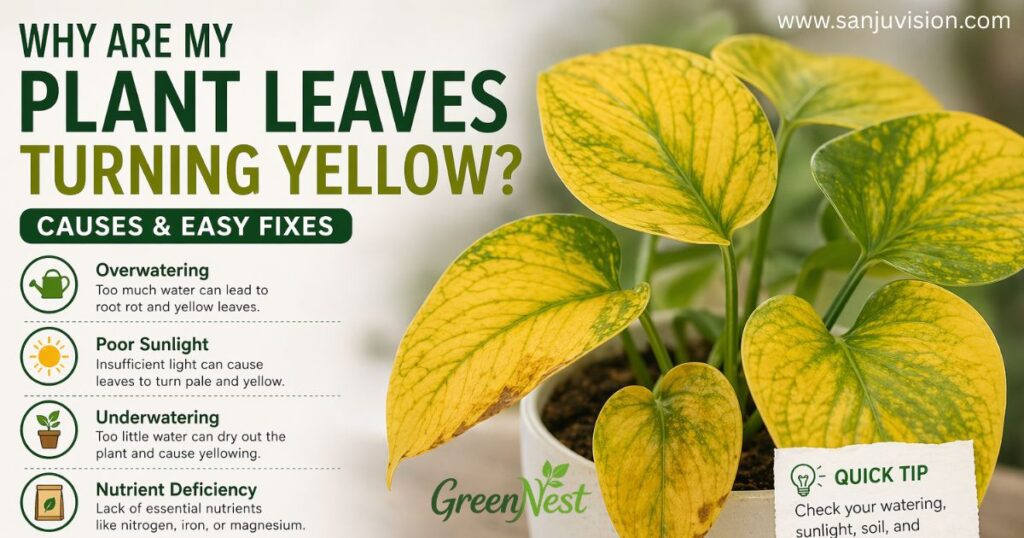
Yellow leaves on your plants can feel frustrating—especially when you’ve been taking good care of them. The truth is, yellowing leaves are one of the most common plant problems, and in most cases, they’re easy to fix once you understand the cause.
In this guide, we’ll break down why plant leaves turn yellow and what you can do to bring your plants back to life.
🌱 1. Overwatering (Most Common Reason)
Overwatering is the #1 reason behind yellow leaves. When plants get too much water, their roots can’t breathe properly, leading to root rot.
🔍 Signs:
- Yellow, soft, and droopy leaves
- Soil stays wet for too long
- Foul smell from soil
✅ Solution:
- Water only when the top 1–2 inches of soil is dry
- Ensure your pot has proper drainage holes
- Use well-draining soil
☀️ 2. Lack of Sunlight
Plants need light to produce energy. Without enough sunlight, leaves start turning yellow and weak.
🔍 Signs:
- Pale yellow leaves
- Slow growth
- Plant leaning towards light
✅ Solution:
- Move your plant to a brighter spot
- Use indirect sunlight for indoor plants
- Rotate the plant regularly
💧 3. Underwatering
Just like overwatering, too little water can also stress your plant.
🔍 Signs:
- Dry, crispy yellow leaves
- Soil feels completely dry
- Leaves may curl
✅ Solution:
- Water your plant regularly
- Don’t let the soil dry out completely (for most plants)
- Follow a proper watering schedule
🌿 4. Nutrient Deficiency
Plants need essential nutrients like nitrogen, iron, and magnesium. A lack of these can cause yellowing.
🔍 Signs:
- Yellow leaves with green veins
- Poor growth
- Small leaves
✅ Solution:
- Use a balanced liquid fertilizer
- Add compost or organic manure
- Feed plants every 2–4 weeks during growing season
🪴 5. Poor Drainage or Soil Issues
If your soil holds too much water or is compacted, roots can’t function properly.
🔍 Signs:
- Yellow leaves + slow growth
- Water sitting on top of soil
- Roots not spreading
✅ Solution:
- Repot using fresh, well-draining soil
- Add sand or perlite to improve drainage
- Choose the right pot size
🌡️ 6. Temperature Stress
Extreme heat or cold can shock your plant, causing leaves to turn yellow.
🔍 Signs:
- Sudden yellowing
- Leaf drop
- Burnt edges
✅ Solution:
- Keep plants in stable temperatures
- Avoid placing near AC, heaters, or direct harsh sunlight
- Protect outdoor plants from extreme weather
🐛 7. Pests & Diseases
Sometimes insects like spider mites or fungal infections are the cause.
🔍 Signs:
- Yellow spots or patches
- Sticky leaves
- Tiny bugs on leaves
✅ Solution:
- Clean leaves with neem oil spray
- Use mild insecticides if needed
- Isolate affected plants
🍂 Is It Normal for Leaves to Turn Yellow?
Yes! Sometimes yellow leaves are completely normal—especially older leaves at the bottom of the plant. Plants naturally shed old leaves to focus on new growth.
👉 If only a few older leaves are yellow, there’s usually no need to worry.
🌟 Final Thoughts
Yellow leaves are your plant’s way of telling you something is wrong. The key is to observe carefully and take the right action.
Most of the time, simple changes like adjusting watering, light, or soil can quickly bring your plant back to healthy green growth.
🌱 Pro Tip
If you’re looking for healthy, low-maintenance plants for your home, explore a wide range of options at Green Nest—perfect for beginners and plant lovers alike.